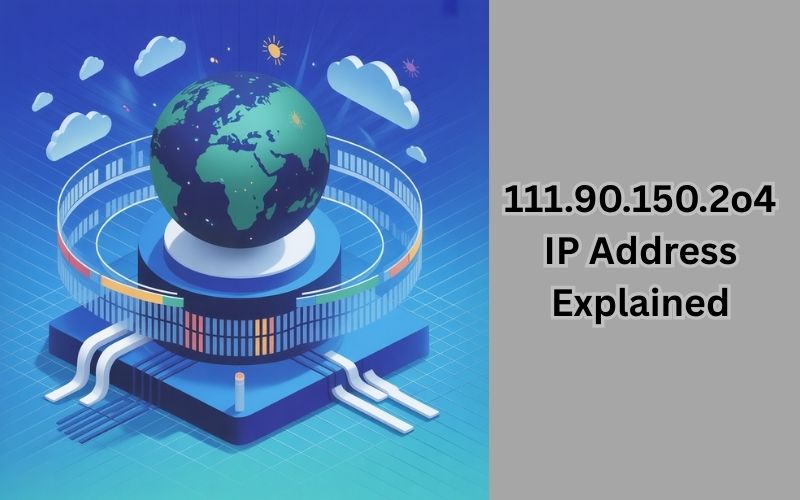
111.90.150.2o4 Explained: Understanding IP Addresses and Their Role on the Internet
The internet has become a necessity in today’s world, and IP addresses are an integral part of it. It facilitates inter-system communication. Sometimes users face strange IP addresses like 111.90.150.2o4, which can create confusion and lead to misinterpreting its meaning.
If you are interested in understanding how IP addresses work, how addresses like 111.90.150.2o4 fit in today’s internet infrastructure, whether it is a valid IP address or not, then keep reading this post.
What Is An IP Address?
IP (Internet Protocol) is a unique numerical identifier assigned to each device connected to a network. It plays a critical role in enabling computers, services, and other devices to locate and communicate with each other using the internet.
There are two formats of IP addresses, IPv4 and IPv6; amongst them, IPv4 is the most commonly used format. Here is an example of a valid IPv4 address:
- 111.90.150.204
Each section is separated with a . and called an octet, which must contain numbers between 0 and 255.
Is “111.90.150.2o4” A Valid IP Address?
At first glance, it seems like a valid IP address, but after close examination of the series, it contains the letter “o” instead of the number “0”, which makes it invalid.
Remember, IPv4 addresses can contain only:
- Numbers
- Periods (dots)
If we replace the letter “o” with the number “0”, it will become:
- 111.90.150.204
Now it is a valid IP address.
How IP Addresses Work On The Internet
IP addresses work like digital mailing addresses. When you visit a website or send data online, your device uses IP addresses to locate the destination server.
The process of IP address can be explained as follows:
- A user enters a website address in a browser.
- A DNS server converts a domain name to an IP address.
- The user’s device connects to the server associated with that IP address.
- Data is exchanged between the two systems.
IP addresses are important to know where to send or receive information.
Types Of IP Addresses
Primarily, there are two types of IP addresses:
IPv4
IPv4 is the oldest and most used IP address type. It contains four segments like 111.90.150.204.
IPv6
IPv6 is the latest version of the IP address that is designed to handle the growing number of internet-connected devices. It contains longer hexadecimal addresses.
Example IPv6 format:
2001:0db8:85a3:0000:0000:8a2e:0370:7334
IPv6 is more complex and provides more unique addresses than IPv4.
Why IP Addresses Matter
IP addresses are the backbone of online communication; they play a crucial role in various activities, such as:
- Website hosting and communication
- Network routing and data transfer
- Cybersecurity monitoring
- Location-based services
- Device identification on networks
Security And Privacy Considerations
IP addresses are required for even basic internet functioning, and they can reveal general information about the user, such as:
- Approximate geographic region
- Internet service provider (ISP)
- Network origin
For these reasons, many users use tools like VPNs or secure networks to protect their identity.
Common Situations Where IP Addresses Appear
You may see an IP address in several contexts:
- Server or website logs
- Network troubleshooting
- Cybersecurity monitoring tools
- Email headers
- Firewall or router settings
Frequently Asked Questions (FAQs)
Is 111.90.150.2o4 A Real IP Address?
No, it is not a real IP address because it includes the letter “o”.
Why Are IP Addresses Limited To Numbers Between 0 And 255?
It is the format of IPv4 types of IP addresses. They are an 8-bit number within the range of 0 to 255.
Can IP Addresses Identify A Person?
An IP address can reveal a person’s approximate location, but identifying a specific individual with only an IP address seems impossible.
Conclusion
111.90.150.2o4 is an example of how a small mistake can make an IPv4 address invalid. IPv4 addresses are number specific, inclusion of “0” in this series made it invalid. In this article, we discussed this topic in detail and also shared informative details related to IP addresses. In the end, we hope that you like reading this post and found it informative. If so, then do share this post with others as well.

How to Build Links Without Losing Sight of Quality







Why HR Teams Should Connect Workforce Planning With Talent Development