Top 7 Trends Influencing the Future of Digital Entertainment
Digital entertainment has always been in motion, shifting with every new technology and cultural wave. What once meant sitting in front of a television or listening to a radio broadcast now includes streaming platforms, mobile games, virtual reality, and even interactive social spaces. The pace of change can feel overwhelming and exciting at the same time, as each shift opens up new ways to connect, play, and experience stories.
From the rise of mobile-first gaming to the growing importance of sustainability, digital entertainment is being reshaped by both technological advances and changing expectations from creators and audiences. Here’s a closer look at key trends that are steadily redefining digital entertainment, offering a glimpse into how everyday experiences may evolve without trying to predict too far ahead.
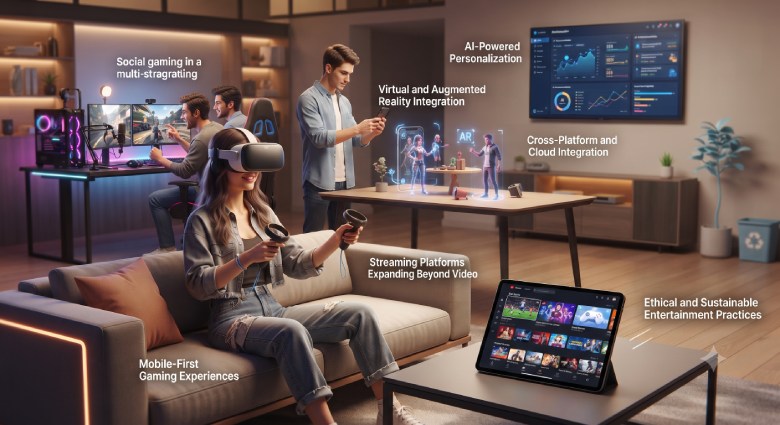
1. Mobile-First Gaming Experiences
Look around during a commute or while waiting in line, and you’ll probably spot someone immersed in a mobile game. Smartphones have become one of the most practical gateways to entertainment, and developers are designing experiences around that reality. Quick sessions, intuitive controls, and lightweight downloads make mobile-first gaming a natural fit for busy routines.
In the Philippines, localized content like Pinoy slots games shows how mobile platforms are evolving beyond convenience by adapting to cultural preferences and regional trends. As devices continue to improve, richer graphics, smoother performance, and more community-driven features will likely shape the next wave of mobile entertainment.
2. Streaming Platforms Expanding Beyond Video
Streaming services started with movies and TV shows, but now they’re expanding into gaming, live sports, and even interactive experiences. This shift means entertainment is no longer confined to passive viewing. For instance, your favorite show might now come with a companion game, or a live concert stream could include interactive fan participation.
These hybrid experiences blur the line between watching and participating. For audiences, it’s about choice, whether to lean back and enjoy or lean forward and engage. For creators, it’s about building ecosystems where different forms of content coexist, offering more ways to connect with fans.
3. Virtual and Augmented Reality Integration
Imagine slipping on a headset and stepping into a fully immersive world, or pointing your phone at a table and seeing holographic characters come to life.Today, virtual reality (VR) and augmented reality (AR) are steadily moving from niche experiments to mainstream experiences. While VR builds entirely new digital environments for deep immersion, AR weaves digital elements directly into the physical world through everyday apps and wearable devices.
Some examples of this include sports broadcasts enhanced with real-time overlays, museum tours enriched with interactive guides, and games that blend physical and digital play. Rather than replacing traditional entertainment, these technologies add layers that make experiences more interactive, memorable, and personal.
4. AI-Powered Personalization
Open a streaming app or music platform, and you’ll notice how quickly it learns your preferences. Those recommendations are powered by artificial intelligence (AI), and its role in entertainment continues to expand. Beyond suggesting shows or songs, AI can adapt gameplay difficulty, customize storylines, or even tailor advertising to match user interests.
This level of personalization means less time searching and more time enjoying. For creators, AI provides new ways to deliver content to the right audiences; for users, it creates experiences that feel more relevant and tailored to their interests. Of course, these advancements also raise questions about privacy and transparency, making it important for entertainment platforms to balance convenience with responsibility.
5. Social Gaming and Community-Driven Platforms
Entertainment has always had a social side, but have you noticed how digital platforms are amplifying it? From cooperative multiplayer games and high-stakes esports tournaments to vibrant live-streaming communities, digital platforms bring people together across borders. Players aren’t just competing; they’re collaborating on strategies and sharing experiences in real time. Social features like integrated chat and community events are becoming standard.
This shift emphasizes that entertainment is about connection, not just content. Whether through casual mobile games or large-scale competitive arenas, the social fabric of gaming is growing stronger, making digital entertainment as much about community as it is about play.
6. Cross-Platform and Cloud Integration
Gone are the days when your favorite game or show was tied to a single device. Cloud technology enables seamless access across devices, from phones and tablets to laptops and smart TVs. You can start a movie on your commute and finish it at home, or pick up a game on your console and continue on your phone.
This flexibility is becoming less of a luxury and more of an expectation. That’s why entertainment platforms are racing to build ecosystems that feel fluid, where switching devices doesn’t interrupt the experience but enhances it.
7. Ethical and Sustainable Entertainment Practices
Audiences are becoming more conscious of the impact their choices have on the world. From reducing the carbon footprint of streaming services to ensuring fair labor practices in game development, sustainability is entering the conversation. Ethical considerations also extend to content moderation, data privacy, and inclusivity.
Companies that prioritize responsibility are likely to earn long-term trust. For audiences, this trend means entertainment can align more closely with values, offering enjoyment without compromising on ethics. Thus, the future of digital entertainment will be defined not only by innovation but also by accountability.
The future of digital entertainment isn’t about one technological breakthrough. It’s about how these various trends converge to create richer, more accessible, and more meaningful experiences. While it’s impossible to predict every development, one thing is clear: digital entertainment will continue to evolve alongside the people who use it, adapting to new expectations and possibilities with each shift.

How to Build Links Without Losing Sight of Quality





Why HR Teams Should Connect Workforce Planning With Talent Development