How Enterprises Adapt Their Operations in a Hybrid Work Environment
Hybrid work started as a quick fix during and after the pandemic. But it has now turned into a permanent shift for many companies.
Employees want flexibility. Executives want productivity and lower costs. Hybrid promises both, but it’s not as simple as letting people choose where they work on a whim.
To really make hybrid work work, enterprises have to rethink everything: office spaces, team culture, tools, and even how success is measured. It’s a big change, but also a big opportunity.
In this post, we’ll break down exactly how large companies are adapting their operations for a hybrid future and what you can learn from them.
What Does Hybrid Work Really Mean?
When people hear “hybrid work,” they often think it just means working from home a few days a week. But it’s more than that.
Hybrid work actually gives employees the freedom to choose how and where they work best. Some companies set fixed in-office days, others go fully flexible. There are even setups where certain teams come in only for big meetings or collaborative projects.
So, it’s not just about location flexibility. It involves rethinking schedules, communication styles, infrastructure, and how work gets done. The focus shifts from “clocking in” to actually delivering results.
How Enterprises are Reimagining Workplace Infrastructure
In hybrid settings, the office doesn’t go away, but it does evolve for the better.
Take Microsoft, for example. The company redesigned its headquarters in Redmond to support hybrid work. Instead of rows of assigned desks, they introduced flexible work zones: hot desks, quiet focus areas, and open collaboration spaces. Employees can choose where they work depending on the task or mood that day.
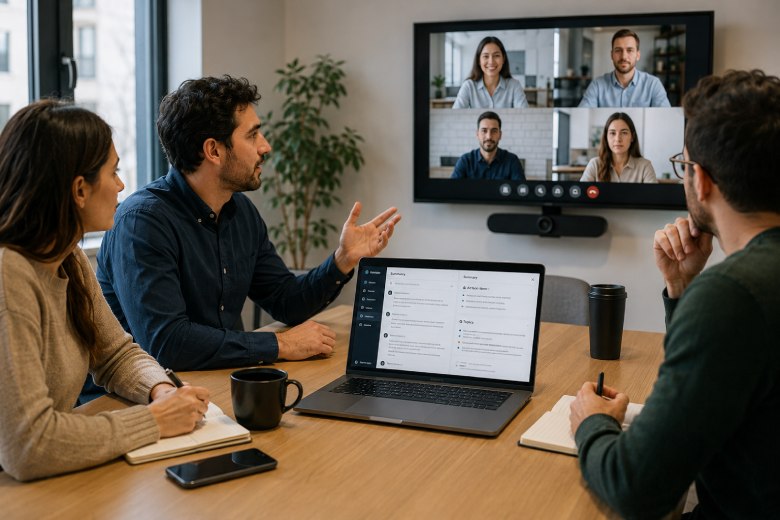
They’ve also invested heavily in tech upgrades. Smart meeting rooms, advanced video conferencing tools, and seamless booking systems make it easy for remote and in-office teams to connect without friction.
On the finance side, companies are also revisiting budgets and operational costs using tools like an income statement template to better understand the impact of upgrading their hybrid work setups on the bottom line.
Overall, the goal is to turn the office into a hub for creativity and teamwork. A place people actually want to come to, not just somewhere they have to show up.
Another example is Dropbox, the popular cloud storage app, shifting its entire workforce to a “virtual-first” approach. This meant investing heavily in secure cloud storage and collaboration platforms like Slack, Microsoft Teams, or Asana to keep communication smooth and projects on track.
The Critical Role of Remote Access in Hybrid Work
A modern remote access software solution, which allows employees to securely connect to company systems and files from any location, also becomes a crucial piece of the hybrid tech stack.
In a hybrid setup, employees may work from different cities, time zones, or even countries—often on personal networks. Without reliable remote access, productivity can grind to a halt the moment someone can't retrieve a needed file or log into a key internal system. That’s why enterprises are moving away from legacy VPNs and embracing cloud-based remote access platforms designed for speed, security, and scalability.
For instance, tools like Splashtop enable seamless access without compromising security. These solutions often integrate with existing identity management tools and use multi-factor authentication to ensure only the right people gain entry. When people can securely work from anywhere, enterprises unlock true flexibility and resilience in their operations.
How Companies are Rethinking Company Culture and Employee Engagement
Working remotely for the bulk of the week doesn’t have to mean company culture is thrown to trash.
However, as you would have guessed, keeping a strong company culture is tricky when people aren’t all in the same room. It’s very much possible (and necessary), though.
Take Salesforce, for example. They launched “Success from Anywhere,” a strategy focused on flexibility and connection. They doubled down on virtual team-building activities, regular all-hands meetings, and mental health check-ins. The idea is to make every employee, whether at home or in the office, feel included and valued.
Enterprises are also investing in better internal communication, such as more transparent updates, open Q&A sessions, and new ways for employees to share feedback.
At the end of the day, you need to keep the sense of belonging alive, no matter where your folks work from.
How Management and Leadership Approaches Are Evolving in Hybrid Workplaces
Hybrid work demands a new style of leadership.
Managers can’t rely on seeing people at their desks anymore. Instead, they need to focus on outcomes over outputs—what’s getting done, not where it’s done. Atlassian is a great example. The company encourages managers to measure success by results, not hours worked.
Leaders also need new skills: how to build trust remotely, support team members individually, and keep everyone aligned without micromanaging (which is the primary reason why most employees jump ship). Many enterprises are running training programs to help managers adapt to this shift.
Empowering employees by creating clear expectations and giving them the flexibility to deliver their best work is essentially what’s needed to lead well in a hybrid work environment.
How to Support Employee Well-being in a Hybrid Workplace
You’ve probably been there: when work and home blur, burnout can creep in fast. That’s why well-being has become a top priority for hybrid workplaces.
For example, Google introduced "reset days" during the pandemic. These are company-wide days off to help employees recharge. They also offer mental health resources, wellness stipends, and encourage managers to openly discuss work-life balance with their teams.
Companies are also paying attention to ergonomics for remote workers, providing stipends for home office setups or sending equipment directly.
The big idea? A healthy, supported team is a productive one, regardless of where they’re working from.
How Enterprises are Ensuring Security and Compliance in a Hybrid Work Environment
A hybrid setup brings new security headaches. With employees working from coffee shops, home networks, and everywhere in between, protecting company data is becoming a real challenge and a bigger priority.
Look at IBM. They’ve ramped up their security protocols for hybrid work by rolling out stronger device management, stricter access controls, and robust employee training on cybersecurity risks.
Enterprises are also adopting zero-trust security models. This means assuming no device or user is automatically trusted, no matter where they log in from.
In short, keeping data safe and staying compliant is a core part of making hybrid work sustainable.
A Couple of Real-World Examples of Hybrid Work Ops Done Right
If you’re a startup, seeing how the big boys do it makes hybrid work feel more real and less overwhelming. We’ve already shared a few examples so far, but here are two more.
Take Spotify. They introduced their “Work From Anywhere” policy, giving employees the freedom to choose their preferred work location and even move cities. They redesigned their offices into collaboration hubs instead of rows of desks, focusing on in-person connection when it matters most.
Then there’s Cisco. They revamped their offices to support flexible schedules and invested heavily in Webex upgrades to improve virtual collaboration. At the same time, they rolled out programs to support mental health, inclusivity, and leadership training for hybrid management.
These companies prove there’s no single “right” way to do hybrid. But by staying flexible and listening to employees, they’ve found models that work.
Wrapping Up
Ready to make hybrid work actually work? Start by listening to your people. Run surveys, host feedback sessions, and find out what employees really want from hybrid work.
Then, invest in the right tech. Prioritize secure, cloud-based tools and reliable collaboration platforms. Rethink the office, making it a place for connection and creativity, not just the usual sea of desks.
Focus on outcomes. Shift performance metrics from hours logged to results delivered. Prioritize well-being to support mental health, encourage balance, and set clear boundaries.
Ultimately, think of hybrid work as an ongoing experiment. The more you listen and adapt, the better it will serve both your people and your business.

How to Build Links Without Losing Sight of Quality







Why HR Teams Should Connect Workforce Planning With Talent Development