Three Trends Reshaping the Customization of Mobile Apps
Mobile apps have become remarkably good at blending into everyday life. Ordering food, Booking appointments, Managing finances, Tracking fitness, Most of this happens through a handful of apps that people use almost without thinking.
That convenience has changed expectations. Users no longer compare an app with its closest competitor; they compare it with every polished digital experience they’ve had. If an app feels generic or requires too much effort to use, there’s a good chance it won’t stay on someone’s phone for long.
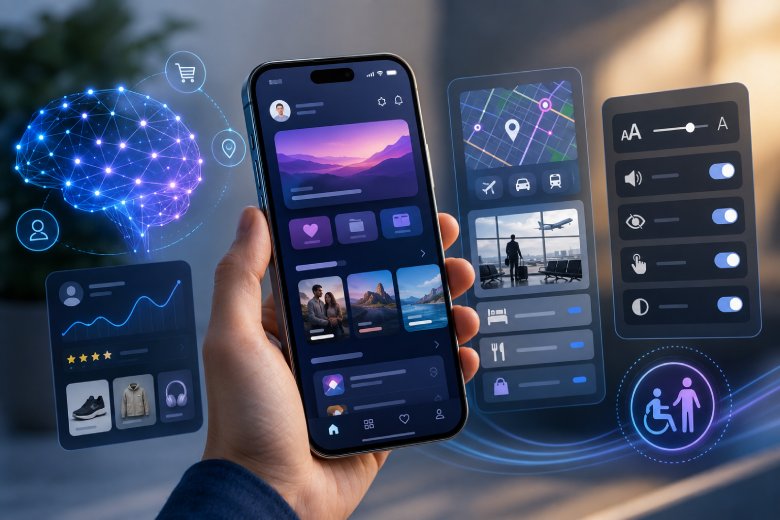
Customization is helped to close that gap. Rather than delivering the same experience to everyone, developers are finding smarter ways to adapt apps around individual users. Three trends, in particularly, are sharing that evolution.
Keep reading on to learn more.
1. AI-Driven Personalization
Personalization has been part of mobile apps for years. But the technology behind it has become much more capable.
Instead of responding to a single click or purchase, AI identifies patterns across hundreds of interactions. It learns which features are used most often, when users are typically active, and the type of content they’re most likely to engage with. Those insights are then used to make recommendations, reorganize content, or simplify routine tasks.
The aim isn’t to make every interaction feel automated. Quite the opposite.
Businesses investing in AI app development are increasingly focused on making personalization feel almost invisible. When the right content appears at the right time, users rarely stop to think about why – it simply feels like the app understands what they’re looking for.
2. Interfaces That Adapt to the Moment
Context matters.
Someone checking a travel app at an airport has very different priorities from someone browsing vacation ideas months before departure. A banking app opened on payday serves a different purchase than the same app opened to freeze a misplaced card.
Modern interfaces are starting to reflect those differences. They no longer treat every session the same. They are, in fact, becoming more responsive to certain factors. Location. Previous activity. Time of day.
Many of these changes are subtle. That’s why they work. Good customization goes unnoticed a lot. Why? Because it removes friction – it doesn’t draw attention to it.
3. Accessibility is Raising the Standard for Everyone
Accessibility is no longer an afterthought in mobile development. Increasingly, it’s influencing the way entire apps are designed.
Features – like scalable text, voice navigation, screen reader support, etc. – allow people to tailor the app to their own needs. For some users, these options are essential. For others, they’re simply more comfortable.
Either way, the result is the same:
An app that’s easier to navigate.
As accessibility becomes more deeply integrated into the design process, it benefits far more than a single group of users. Cleaner layouts. Cleaner navigation. Greater flexibility. It all tends to improve the overall experience across the board.
To conclude, the next generation of mobile apps won’t stand out because they offer more features. As shown by the trends above, they’ll stand out because they demand less effort.

Three Trends Reshaping the Customization of Mobile Apps